
When a container of Kenyan tea arrives at an overseas port, coffee reaches an international roaster, macadamia nuts appear on supermarket shelves, or fresh produce enters a foreign market, the journey behind that final product is rarely visible.
What may appear to be a simple export is, in reality, the result of a coordinated supply chain involving farmers and producers, sourcing partners, processors, quality teams, certification bodies, logistics providers, exporters and international buyers.
Every stage matters.
A quality product can lose its market opportunity through poor handling, inadequate documentation or failure to meet destination-market requirements. Similarly, an international buyer needs confidence that the required product specifications, quantities, quality standards and delivery expectations can be met consistently.
Agricultural export, therefore, is not simply about having a product. It is about creating the right connections, systems and support around that product so that it can move efficiently from its source to the market where it is needed.
Kenya's Agricultural Opportunity
Tea remains one of Kenya's most recognised agricultural exports, but the country's agricultural potential extends well beyond tea.
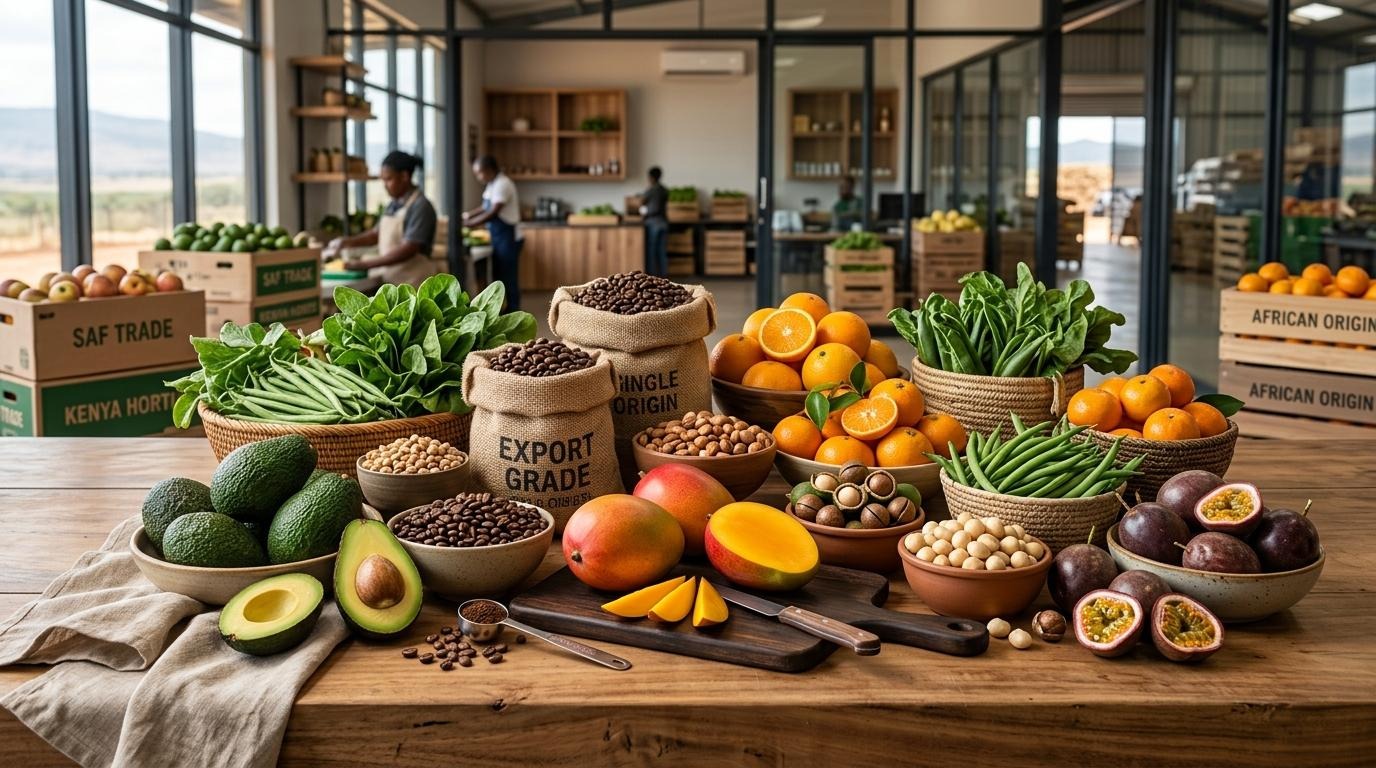
Kenya has established production and export sectors across commodities such as coffee, horticultural produce, macadamia nuts, other nuts and oil crops, spices and a range of other agricultural products. Recent data from the Agriculture and Food Authority illustrates the scale and diversity of this opportunity.
During April–June 2025, Kenya's coffee exports increased by 7% in volume to 15,748 metric tonnes, while export value rose by 36% to USD 117.4 million. At the same time, 97% of coffee exports remained in unprocessed green form, highlighting the potential for greater value addition within the coffee value chain.
The horticulture sector also recorded significant growth during the same period, with fresh horticultural exports reaching 130,568 metric tonnes valued at approximately KES 50.55 billion and reaching 128 international destinations.
Kenya's nuts and oil crops sector recorded exports of 12,787 metric tonnes valued at approximately KES 4.61 billion during the quarter.
Together, these developments demonstrate that Kenya offers a diverse agricultural sourcing base with opportunities extending across multiple commodities and international markets.
Beyond the Farm Gate
The journey from farm to international buyer does not end with harvesting.
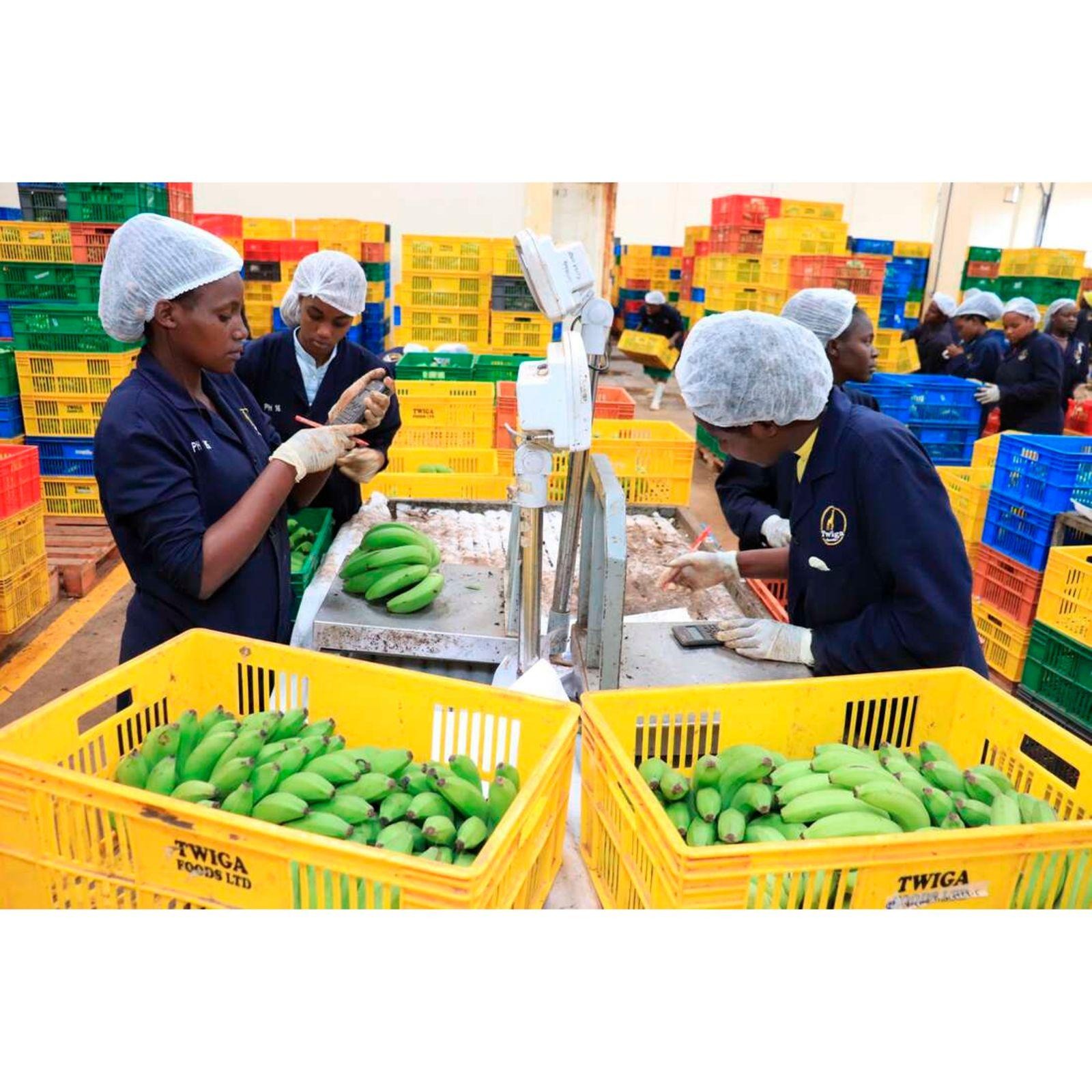
Products entering international markets may need to satisfy requirements relating to quality and specifications, food safety, packaging and labelling, traceability, certification, inspection, phytosanitary controls, export documentation and the import regulations of the destination country.
For regulated agricultural products, export requirements and phytosanitary certification are an important part of the process. KEPHIS provides systems and procedures that enable stakeholders to check applicable import and export requirements and obtain the relevant phytosanitary documentation.
This means that export readiness is as important as product quality.
A product may have strong market potential, but reaching the buyer requires more than producing it. It requires the right information, documentation, coordination and market-specific preparation.
Understanding the Market Before Moving the Product
Successful agricultural trade begins with understanding the market before the product moves.
Who is the buyer? What specifications are required? What volumes are needed? What certifications apply? Which packaging format is appropriate? What are the destination-market regulations? What price and quality expectations exist? And what is the most practical route from origin to destination?
These considerations help determine whether an export opportunity can become a sustainable commercial relationship.
Kenya's growing participation in regional and international trade creates opportunities for agricultural businesses, but taking advantage of those opportunities requires market knowledge, dependable supply relationships and the ability to coordinate the requirements of different participants in the supply chain.
The Importance of Value Addition
Kenya's agricultural opportunity is also about creating greater value from what the country already produces.
Exporting raw commodities provides important income and market opportunities, but processing, packaging, branding and other forms of value addition can create additional economic value within agricultural supply chains.
Coffee provides a clear example. Although Kenya continues to have a strong reputation for coffee, the high proportion of exports remaining in green form demonstrates the potential for further development of value-added products.
The tea sector similarly continues to explore value addition and market development as part of strengthening Kenya's position in international markets.
The opportunity, therefore, is not simply to export more.
It is also to create greater value from what Kenya produces.
Agrico Sourcing Partners: Connecting Supply with Market Demand
At Agrico Sourcing Partners Ltd, we believe that successful agricultural trade begins with the right connections.
Our role is to operate as a sourcing and market-connection partner, helping bridge the gap between agricultural producers and international market demand.
Rather than positioning ourselves as the owner or controller of every stage of the export process, we focus on what we can do effectively: identifying suitable sources, understanding buyer requirements, facilitating communication between stakeholders, supporting quality expectations and coordinating the various elements required to move products toward their intended markets.
Our sourcing interests extend beyond tea to include commodities such as coffee, macadamia, nuts, spices and other carefully selected agricultural products, depending on market demand, product requirements and supply availability.
Through relationships with producers, suppliers, processors, logistics providers and buyers, we seek to help create more efficient connections across the agricultural supply chain.
Our objective is straightforward: to connect the right products with the right markets while supporting reliable and professionally coordinated trade.
Building Confidence Across the Supply Chain
International agricultural trade depends on trust between multiple parties.
A buyer needs confidence that the product will meet agreed specifications.
A producer or supplier needs confidence that there is a genuine and professionally managed market opportunity.
Service providers and logistics partners need accurate information and timely coordination.
This is where a strong sourcing and market-connection partner can add value.
At Agrico, our approach is guided by five principles:
Quality — supporting consistent products that meet agreed requirements.
Reliability — building dependable sourcing relationships and supporting timely coordination.
Transparency — maintaining clear communication between relevant stakeholders.
Compliance — recognising the regulatory, documentation and market requirements that apply to each transaction.
Partnership — developing long-term relationships across the supply chain rather than focusing only on individual transactions.
These principles guide how we engage with suppliers, buyers and other supply-chain partners.
Connecting African Agriculture to the World
The global agricultural market is competitive. Buyers have choices, markets have standards, logistics can be complex and consumer expectations continue to evolve.
Kenya nevertheless has significant strengths: an established agricultural sector, experienced producers, recognised export industries and a growing range of opportunities for market diversification and value addition.
At Agrico Sourcing Partners, we believe that unlocking this potential requires stronger connections between producers and markets.
Our role is to help facilitate those connections by bringing together sourcing opportunities, market requirements and the partners needed to support successful transactions.
Every shipment represents more than a commodity. It represents a farmer's work, a supplier's commitment, a buyer's expectations and a network of people and organisations working together to move a product from its source to its final destination.
We are proud to contribute to that journey by helping connect African agricultural products with international market opportunities—responsibly, reliably and with confidence.
Agrico Sourcing Partners Ltd
Sourcing Excellence. Delivering Confidence.
Sources & Further Reading
The following official sources provide supporting information and industry context for the agricultural export, market access, value addition and regulatory information referenced in this article:
Agriculture and Food Authority (AFA)
Official information and agricultural-sector statistics covering coffee, horticulture, nuts and oil crops and other scheduled crops.
Agriculture and Food Authority – Official Website
AFA Agricultural Export Data & E-Bulletins
Quarterly agricultural export statistics and sector performance data, including coffee, horticulture and nuts and oil crops.
https://afa.go.ke/e-bulletins-2025-2026/
Tea Board of Kenya
Official information on Kenya's tea industry, including production, exports, markets and industry performance.
Tea Board of Kenya – Industry Performance Reports
Kenya Plant Health Inspectorate Service (KEPHIS)
Official information on agricultural export requirements, phytosanitary inspection and certification, and import/export procedures.
KEPHIS – Import, Export & Border Control
State Department for Trade – Kenya
Information on Kenya's trade policy, export promotion, international trade and market-access initiatives.
State Department for Trade – External Trade
Comments (0)