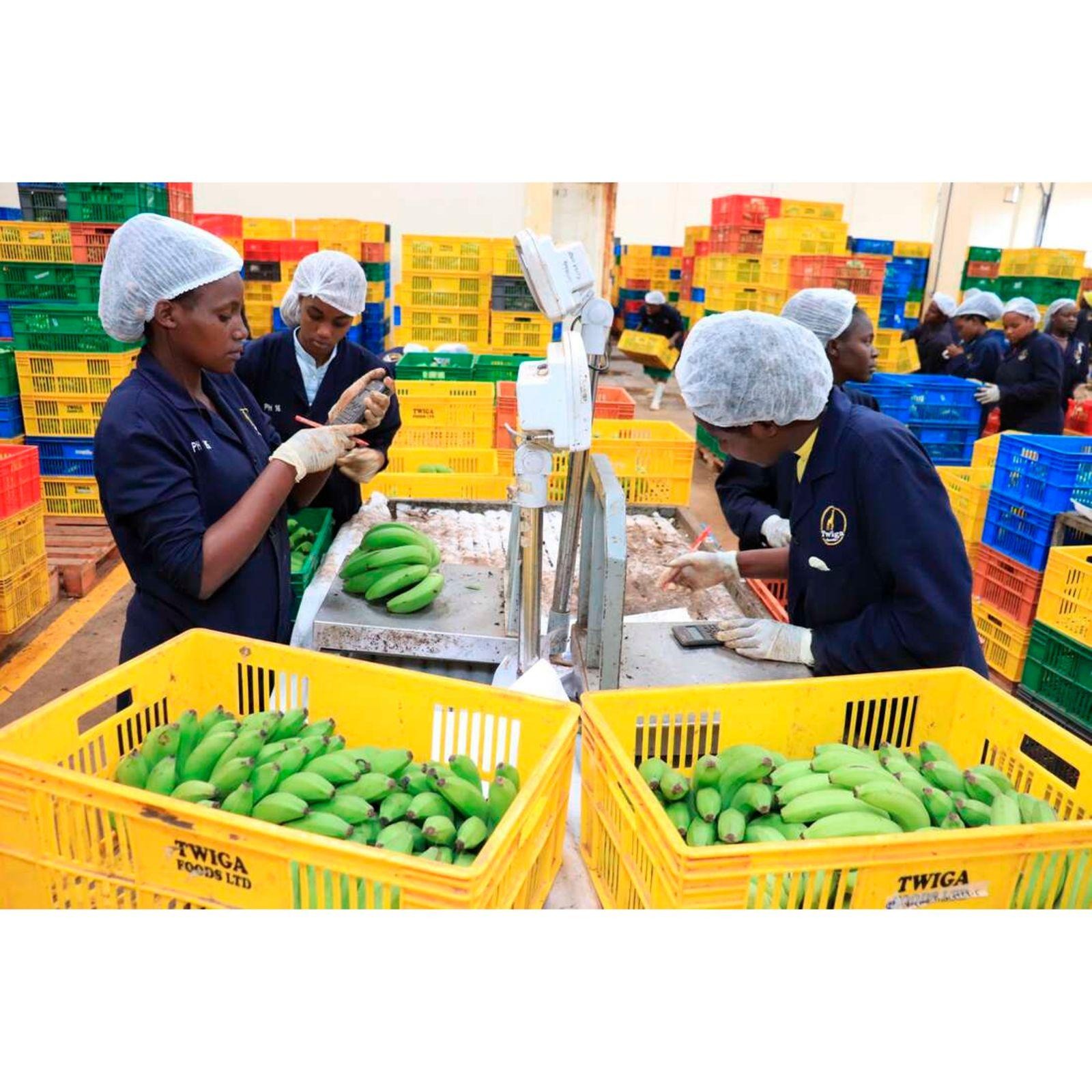
Sourcing from Kenya? 8 Things Every International Buyer Should Know Before Placing an Order
Finding an agricultural product is only the beginning. Finding the right supplier, verifying quality, understanding regulations and ensuring reliable delivery are what turn a sourcing opportunity into a successful business relationship.
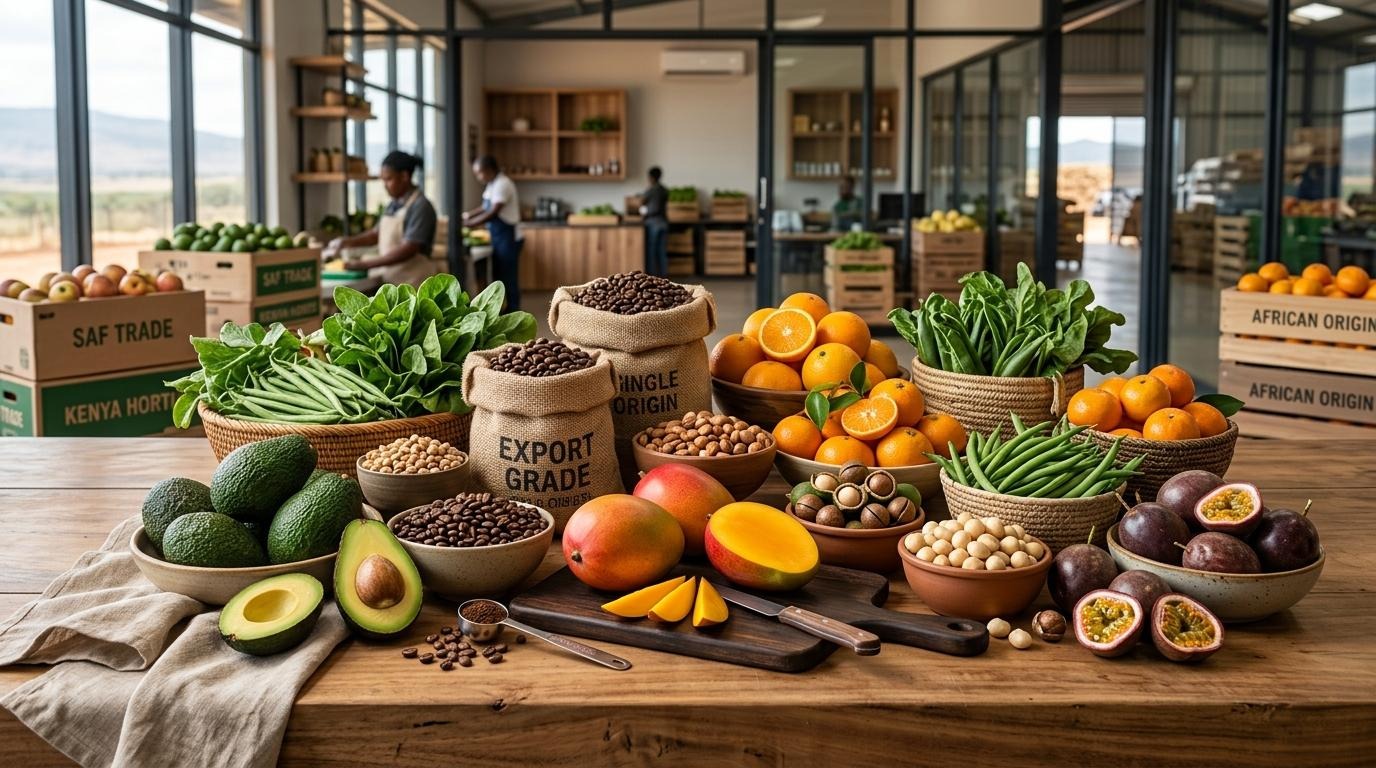
Kenya offers international buyers a diverse range of agricultural products, including tea, coffee, macadamia nuts, fresh fruits, vegetables, flowers, spices and other commodities. Its agricultural sectors provide opportunities for importers, wholesalers, distributors, food manufacturers and retailers seeking products for different markets.
However, sourcing across borders requires more than identifying an attractive product or receiving a competitive quotation. Buyers need to understand the origin of the product, the supplier’s capabilities, the applicable standards, the documentation required and the practical arrangements for moving the goods to their destination.
For buyers exploring Kenya as a sourcing destination, preparation can help reduce avoidable risks, improve communication and establish more dependable supplier relationships.
At Agrico Sourcing Partners Ltd, we believe that successful agricultural trade begins with informed decisions, clear expectations and the right connections between supply and market demand.
Here are eight important considerations for international buyers before placing an agricultural order from Kenya.
1. Be Clear About the Product You Need
Before contacting suppliers, define exactly what you intend to buy.
A general request for tea, coffee, nuts or fresh produce may not provide enough information for a supplier to determine whether they can meet your requirements.
For example, a tea buyer may need black CTC, orthodox, green or purple tea. A coffee buyer may require a particular grade, screen size or cup profile. A macadamia buyer may specify kernels, grades, sizes and packaging formats. A fresh-produce importer may need particular varieties, sizes, maturity levels and packing specifications.
Before requesting quotations, establish:
The exact product and variety.
Required grade, size, quality and technical specifications.
Intended use, such as retail, food manufacturing, wholesale or further processing.
Required quantity and expected purchasing frequency.
Packaging format and labelling requirements.
Target destination market.
Preferred delivery schedule and commercial terms.
The more clearly these requirements are communicated, the easier it becomes to assess whether a potential supplier is suitable.
A well-defined product requirement is the foundation of effective sourcing.
2. Verify the Supplier Before Making a Commitment
A professional website, attractive quotation or promising conversation does not, by itself, establish that a supplier can deliver the product as agreed.
Before committing funds, buyers should conduct reasonable due diligence on the company or supplier.
Depending on the transaction, useful checks may include:
Confirming the supplier’s registered business identity and contact details.
Understanding whether the supplier is a producer, processor, exporter, trader or sourcing intermediary.
Requesting relevant product specifications and recent quality information.
Checking whether the supplier has access to the required quantity and can demonstrate that availability.
Requesting references or evidence of previous transactions where appropriate.
Understanding which licences, registrations or product-specific approvals apply.
Confirming the parties responsible for quality control, documentation, packing and shipment.
Where possible, buyers may arrange independent inspections, factory or farm visits, third-party verification or other checks appropriate to the value and risk of the order.
Not every supplier performs every role in the export chain. A sourcing intermediary, for example, may coordinate introductions and supply-chain partners without owning the farm, processing facility or export operation.
The important point is to understand who is responsible for each part of the transaction and verify that the relevant capabilities exist.
3. Confirm Quality Before Placing a Large Order
Quality expectations should be agreed before production, processing or shipment—not after the goods arrive.
Terms such as “premium quality,” “export quality” and “high grade” can mean different things to different buyers. Clear specifications help both parties understand what is acceptable.
Depending on the commodity, quality requirements may cover:
Appearance, grade, size and consistency.
Moisture content and foreign matter.
Taste, aroma or other sensory characteristics.
Food safety and relevant contaminant limits.
Pesticide residues, microbiological parameters or other testing requirements, where applicable.
Packaging integrity and shelf life.
Traceability and origin information.
Buyers should consider requesting representative samples, product specification sheets, laboratory reports or pre-shipment inspection where appropriate.
For large or recurring orders, the contract should identify the agreed specifications, inspection method, sampling procedure and process for handling non-conforming goods.
A sample can help assess quality, but buyers should also establish how the supplier will maintain consistency across the full order and future shipments.
The goal is not simply to approve a sample. It is to agree on a measurable standard for the goods being purchased.
4. Understand the Regulations of Your Destination Market
One of the most important steps in international agricultural sourcing is confirming the requirements that apply when the product enters the buyer’s country.
Rules vary according to the commodity, country of origin, destination market, intended use and processing status. Requirements for fresh vegetables may differ considerably from those for packaged tea, roasted coffee or processed nuts.
For plant products, phytosanitary requirements may apply. In Kenya, the Kenya Plant Health Inspectorate Service (KEPHIS) handles relevant plant-health inspections and phytosanitary certification. Its official guidance explains that requirements from the importing country must be established and met before certification. See the KEPHIS phytosanitary services guidance.
For buyers importing into the European Union, official EU guidance explains that certain plants and plant products require phytosanitary certificates, while food and feed imports may be subject to applicable safety and official-control requirements. The exact rules depend on the product.
Before placing an order, buyers should confirm:
Whether the product is permitted to enter the destination market.
Applicable food safety, plant health or other sanitary requirements.
Whether import permits, phytosanitary certificates, health certificates or testing are required.
Applicable residue limits, labelling and packaging rules.
Whether specific certifications or approved facilities are required.
Customs procedures, tariffs and rules of origin.
For EU-bound products, the European Commission’s Access2Markets portal can help buyers check tariffs, rules of origin, product requirements and import procedures for a particular product and trade route. General guidance should always be supplemented with the rules applicable to the specific product and destination.
Do not assume that a product can be exported simply because it is produced in Kenya. Confirm market access and compliance requirements before making a commercial commitment.
5. Understand the Documentation Required for the Shipment
International agricultural trade involves documentation that supports the commercial transaction, customs clearance and any applicable regulatory controls.
The documents required will depend on the commodity, destination, trade terms and regulatory framework. They may include:
Commercial invoice.
Packing list.
Sales contract or purchase order.
Certificate of origin, where required or used to claim preferential treatment.
Phytosanitary certificate for regulated plant products, where applicable.
Relevant export permits, inspection documents or test reports.
Transport documents, such as a bill of lading or air waybill.
Additional documents required by the importing country or buyer.
Kenya’s export procedures may also involve a licensed customs clearing agent and customs declaration. The Kenya Revenue Authority provides guidance on export documentation and clearance.
KEPROBA also highlights the importance of accurate export documentation in avoiding unnecessary delays and costs.
The buyer and supplier should agree early on who will prepare each document, who will verify its accuracy and when it must be available.
Names, product descriptions, quantities, weights, origin details and shipment information should be consistent across the relevant documents. Errors or omissions can cause delays, additional charges or difficulties at destination.
6. Plan Packaging, Logistics and Delivery Before the Goods Are Ready
A product can meet its quality specifications and still encounter problems if it is packaged, stored or transported incorrectly.
Logistics planning should begin when the order is being negotiated, particularly for fresh or temperature-sensitive agricultural products.
Consider the following:
Packaging: Does it protect the product and comply with the buyer’s requirements? Are the correct labels, lot details and handling instructions included?
Storage and handling: Does the product require dry storage, ventilation, refrigeration, temperature monitoring or protection from moisture and contamination?
Transport: Is sea freight, air freight, road transport or a combination of methods appropriate for the product, delivery schedule and budget?
Lead times: How much time is needed for sourcing, harvesting, processing, inspection, packing, documentation and transit?
Shipping terms: Have the parties clearly agreed on delivery responsibilities, freight costs, insurance and the point at which risk transfers? The chosen Incoterms® rule, where used, should be stated precisely in the contract.
Contingency planning: What happens if inspection, documentation, transport or delivery is delayed?
Fresh produce may require especially close coordination between harvesting, packing, inspection and dispatch. Shelf-stable products can have different handling needs, but still require suitable packaging and protection throughout transit.
The objective is to match the logistics arrangement to the product rather than treating transport as an afterthought.
7. Agree on Price, Payment Terms and Responsibilities
A competitive quotation is important, but the lowest price does not always represent the best overall commercial option.
Buyers should compare quotations on a like-for-like basis. Differences may arise from product grade, processing, packaging, minimum order quantities, inspection, transport, insurance, delivery terms and payment conditions.
Before confirming an order, make sure the parties agree on:
Product description, specifications and quantity.
Unit price, currency and any applicable additional costs.
Payment schedule and method.
Production, readiness and delivery timelines.
Inspection and acceptance procedures.
Responsibilities for export documentation and freight.
Procedures for handling delays, shortages, damaged goods or non-conformity.
Contract termination and dispute-resolution arrangements.
For unfamiliar suppliers or higher-value orders, buyers should consider appropriate commercial safeguards, independent verification and payment arrangements suited to the transaction’s risk.
Written agreements reduce the possibility of misunderstandings by setting out what each party has committed to deliver and what happens if expectations are not met.
The objective is to establish a commercially workable arrangement in which the responsibilities and risks are understood by everyone involved.
8. Build a Relationship That Supports Consistent Supply
A successful first shipment is valuable. A dependable sourcing relationship that supports future orders can be even more valuable.
Agricultural supply can be affected by seasonality, harvest conditions, processing capacity, weather, market prices and competing demand. Buyers should therefore understand how a supplier manages availability and communicates changes.
For recurring purchases, discuss expected order frequency, seasonal supply patterns, quality monitoring, lead times, forecasts and procedures for addressing problems.
Good communication matters throughout the relationship. Buyers should be able to raise concerns, receive clear responses and understand the status of their orders.
Suppliers and sourcing partners should also be transparent about limitations. It is better to confirm realistic volumes and delivery dates than to make promises that cannot be supported.
Where the relationship works well, both sides can plan more effectively, improve coordination and identify opportunities for future business.
Where Agrico Sourcing Partners Fits In
At Agrico Sourcing Partners Ltd, we view agricultural sourcing as more than locating a product. It involves understanding buyer requirements, identifying suitable potential sources and helping the relevant parties establish a clear path towards a commercial transaction.
Our position is that of a sourcing and market-connection partner. Depending on the product and arrangement, our role may include helping identify potential suppliers, facilitating communication, clarifying product specifications, supporting alignment on quality expectations and coordinating with relevant supply-chain partners.
Our areas of interest include tea, coffee, macadamia and other nuts, spices and selected agricultural products where buyer demand and suitable supply can be established.
We recognise that each commodity and destination market has its own requirements. Supplier capability, product availability, compliance, documentation and logistics must therefore be considered in the context of each opportunity.
We do not assume that every product is always available or that one business necessarily controls every stage of the export chain. Instead, we value transparent communication, appropriate verification and clear responsibilities among the parties involved.
Our aim is to help buyers and supply-side participants explore suitable opportunities with a better understanding of the product, the requirements and the connections needed to move the transaction forward.
Agrico Sourcing Partners Ltd — Sourcing Excellence. Delivering Confidence.
From a Sourcing Enquiry to a Confident Business Decision
Kenya’s agricultural sector offers opportunities across established and emerging product categories. But a successful international purchase depends on more than the availability of an attractive commodity.
Buyers need clearly defined specifications, credible suppliers, verified quality, a sound understanding of market requirements, accurate documentation, suitable logistics and transparent commercial terms.
Taking these steps before placing an order can help reduce avoidable risks and establish a stronger foundation for long-term trade.
For buyers considering Kenyan agricultural products, the best starting point is a clear requirement and a careful assessment of the supply opportunity.
Because in international agricultural trade, the right product matters—but so do the right source, the right standards and the right connections.
Sources & Further Reading
The following official resources are useful starting points for buyers researching Kenyan agricultural products and the requirements for international trade. Requirements should always be checked for the exact commodity and destination market.
1. Kenya Plant Health Inspectorate Service (KEPHIS)
Phytosanitary services, plant-health requirements and export certification for regulated plant products.
https://www.kephis.go.ke/phytosanitary-services
2. KEPHIS – Frequently Asked Questions
Guidance on plant import permits, phytosanitary certificates and related procedures.
https://kephis.go.ke/index.php/faqs-0
3. Agriculture and Food Authority (AFA)
Information on Kenya’s regulated agricultural value chains, including coffee, horticulture, nuts and oil crops.
https://www.afa.go.ke/
4. Kenya Export Promotion and Branding Agency (KEPROBA)
Export procedures, market information, export planning and trade advisory resources.
https://www.makeitkenya.go.ke/
5. KEPROBA – General Procedures for Exporting
An overview of business registration and product-specific export permits and regulatory requirements.
https://www.makeitkenya.go.ke/about-keproba/news-room/latest-news/general-procedures-for-exporting
6. Kenya Revenue Authority (KRA)
Export customs procedures and documentation, including the role of customs clearing agents.
https://www.kra.go.ke/business/companies-partnerships/companies-partnerships-pin-taxes/company-partnership-imports-exemptions
7. European Commission – Access2Markets
For EU-bound shipments, check tariffs, rules of origin, product requirements and customs procedures for the specific product and destination.
https://trade.ec.europa.eu/access-to-markets/en/home
8. European Commission – Imported Food and Feed Controls
Official guidance on EU import controls and food safety requirements.
https://food.ec.europa.eu/horizontal-topics/official-controls-and-enforcement/imported-products_en
9. European Commission – Plant Health Requirements
Information on phytosanitary certificates and rules governing plants and plant products entering the EU.
https://food.ec.europa.eu/plants/plant-health-and-biosecurity/trade-plants-plant-products-non-eu-countries_en
Important note: This article is general educational information, not a substitute for product-specific regulatory, customs or legal advice. Buyers should confirm the current requirements with the competent authorities and relevant professionals before shipping.

Comments (0)